

Starten Sie eine neue Suche und finden Sie ihre nächste berufliche Herausforderung oder informieren Sie sich über spannende Arbeitgeber.
Postdoc (m/f/x) – Immunology of Aging Leibniz-Institut für Alternsforschung - Fritz-Lipmann-Institut (FLI) e.V.

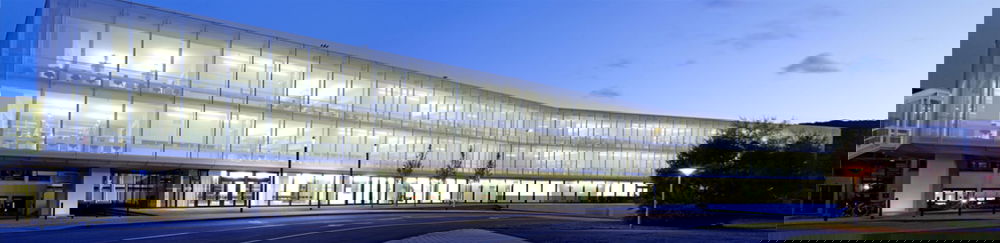
The Leibniz Institute on Aging – Fritz Lipmann Institute (FLI) in Jena is a federal and state government-funded research institute and member of the Leibniz Association (Leibniz-Gemeinschaft). FLI’s internationally visible and highly competitive research is focused on understanding the mechanisms of aging and associated age-related diseases. Scientists from over 40 countries are currently investigating the molecular mechanisms of aging and the occurrence of age-related diseases. Our aim is to create the basis for new approaches in medicine as a way to improve the health of the elderly (www.leibniz-fli.de).

The Research Group of Prof. Claudia Waskow at the FLI invites a highly motivated Postdoctoral Researcher (m/f/x) to spearhead an ambitious project at the intersection of hematopoietic stem cell (HSC) homeostasis and long-term immunity. In this role, you will move beyond traditional models by integrating inflammatory challenges with a sophisticated experimental pipeline that spans self-generated humanized mouse models and direct studies on human cells. Your mission will be to translate fundamental biological principles into a deeper understanding of the aging organism, specifically exploring how altered immune output leads to long-term clinical sequelae. This is a unique opportunity for a researcher who wants to combine high-level experimental animal work with human-centric translation to solve the interdependence between hematopoiesis and lifelong immunity.
Postdoc (m/f/x)
Immunology of Aging
Research focus of the Lab:
At the Waskow Research Group we are deconstructing the cellular blueprint of aging to redefine how we understand lifelong health. Our mission is to bridge the gap between steady-state hematopoiesis and chronic inflammation, mapping the precise regulatory shifts that govern blood cell regeneration from birth through senescence. By joining our team, you will dive into the complex mechanisms of stem cell fate, investigating how the immune system’s delicate homeostasis contributes to organismal aging. We don’t just observe these transitions; we resolve them at the highest level using state-of-the-art genetic mouse models and cutting-edge single-cell technologies. If you are ready to master high-resolution science and answer the fundamental questions of how life’s "stress tests" rewire our biology, we invite you to help us shape the future of regenerative medicine.
Your tasks:
- Designing and performing experimental studies using animal models and human cells
- Planning and conducting animal experiments
- Analyzing, documenting, and presenting experimental data and results
- Actively participating in scientific discussions and team meetings
- Taking over project responsibility
- Collaborating closely within an interdisciplinary research team
- Sincere interest in analysis of large-scale data – we can provide guidance
Your qualifications:
- University degree (PhD, M.D., or equivalent) in biology, life sciences, or biomedicine
- Strong motivation and a genuine interest in stem cell biology, hematopoiesis, and immunobiology
- At least basic experience in bioinformatic analysis (bulk RNA-seq, scRNA-seq, proteomics)
- Excellent teamwork and communication skills
- Solid experience with flow cytometry and fluorescence-activated cell sorting (FACS)
- FELASA certification and hands-on experience in planning and conducting animal experiments
- B2 Level in German language is advantageous
If you enjoy experimental science, love to discuss your findings, and cherish working in a collaborative research team – you might just be the person we’re looking for!
We offer:
- You will become part of a world-leading research institute dedicated to the biology of aging and have the opportunity to join a very well-equipped lab with an international team and the focus on immunobiology.
- You will have access to multiple state-of-the-art facilities. Our work is embedded in the Beutenberg Campus, an interdisciplinary base for innovative research.
- The offered position is integrated in the FLI PostDoc Network. The network promotes interdisciplinary collaborations involving clinician scientists, basic scientists, and bioinformaticians and supports career development and postdoctoral training courses.
- The contract conditions and the salary will be according to the collective labor agreement for public service employees of the federal states of Germany (E 13 TV-L).
- Furthermore, we offer flexible working time, a family-friendly working environment that provides a healthy work-life balance, company health management, including support for child care solutions, and dual career options.
Application:
Please apply online through the FLI application portal by April 6, 2026.
FLI is proud to be an equal opportunity employer and promotes diversity. It aims to increase the proportion of underrepresented groups in case of equal suitability. All qualified persons, regardless of race, color, religion, age, sex, sexual orientation, gender identity, national origin, disability, veteran status, or other classification protected by law will receive consideration for employment.

Weitere Aktionen
Weitere Informationen zum Arbeitgeber
Leibniz-Gemeinschaft

Forschung für die beste der möglichen Welten
Die Leibniz-Gemeinschaft verbindet 96 eigenständige Forschungseinrichtungen. Ihre Ausrichtung reicht von den Natur-, Ingenieur- und Umweltwissenschaften über die Wirtschafts-, Raum- und Sozialwissenschaften bis zu den Geisteswissenschaften.
Leibniz-Institute widmen sich gesellschaftlich, ökonomisch und ökologisch relevanten Fragen. Sie betreiben erkenntnis- und anwendungsorientierte Forschung, auch in den übergreifenden Leibniz-Forschungsverbünden, sind oder unterhalten wissenschaftliche Infrastrukturen und bieten forschungsbasierte Dienstleistungen an. Die Leibniz-Gemeinschaft setzt Schwerpunkte im Wissenstransfer, vor allem mit den Leibniz-Forschungsmuseen. Sie berät und informiert Politik, Wissenschaft, Wirtschaft und Öffentlichkeit.
Leibniz-Einrichtungen pflegen enge Kooperationen mit den Hochschulen - in Form der Leibniz-WissenschaftsCampi, mit der Industrie und anderen Partnern im In- und Ausland. Die Leibniz-Institute unterliegen einem transparenten und unabhängigen Begutachtungsverfahren. Aufgrund ihrer gesamtstaatlichen Bedeutung fördern Bund und Länder die Institute der Leibniz-Gemeinschaft gemeinsam.
Ähnliche Jobs per Mail erhalten?
Abonnieren Sie unsere Job-Mail!
Ähnliche Jobs

Universität für Bodenkultur Wien

Universitätsklinikum Heidelberg - UK Mannheim GmbH

Max-Delbrück-Centrum für Molekulare Medizin (MDC)